

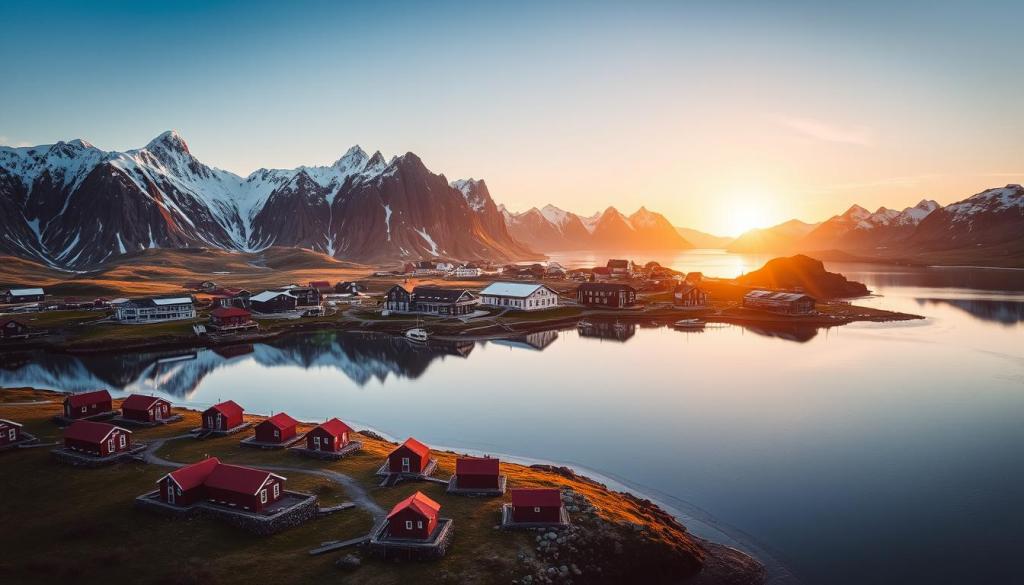
Imagine a place where mountains meet the sea, and villages nestle in the rocks. Welcome to the Lofoten Islands Norway, a place of beauty. This guide shows why these islands are a top spot in Norway. They offer nature and culture in perfect harmony.
Key Takeaways
- The Lofoten Islands offer dramatic landscapes shaped by glaciers and the sea.
- These Arctic Norway tourism spots feature the midnight sun in summer and northern lights in winter.
- Traditional fishing villages like Henningsvær showcase Norway’s heritage.
- It’s a must-see destination for photographers and nature lovers.
- Plan your Norway travel guide itinerary to explore both coastal trails and hidden fjords.
The Majestic Lofoten Archipelago: An Introduction
The Lofoten archipelago is a stunning area on Norway’s northern coast. It’s shaped by ice and sea. Here, you’ll find dramatic peaks, blue fjords, and charming villages.
Travelers from all over come to explore its history and natural beauty. The Lofoten Islands offer an unforgettable adventure.
The Arctic Paradise: Location and Geography
The archipelago stretches 200 kilometers along Norway’s northern edge. It includes islands like Austvågøy, Vestvågøy, Flakstadøy, and Moskenesøy. These islands rise from the Norwegian Sea, with peaks like the Lofoten Wall.
Sheltered bays and fishing villages add to the area’s beauty. These villages show the region’s deep connection to the sea.
A Brief History of the Lofoten Islands
The Lofoten Islands have a rich history. They were home to Viking boat burials and ancient fish oil trading. By the 19th century, fishing villages thrived here.
Today, you can still see red rorbuer (fishermen’s cabins) in the harbors. The cod fishing industry shaped the economy and culture.
Why the Lofoten Islands Should Top Your Norway Bucket List
Imagine kayaking under the midnight sun or seeing the Northern Lights. The Lofoten Islands are a top spot for these experiences. They offer hiking trails and the quiet beauty of fishing villages.
Every visit here connects you to a world where nature and heritage meet. The Lofoten Islands are more than a place; they’re a story to be lived.
When to Visit: Seasons and Weather in the Lofoten Islands
Planning your trip to the Lofoten Islands starts with understanding the Lofoten Islands weather. Each season offers unique experiences, so choose your visit based on what you love most. Let’s explore the highlights:
Winter (November–March) brings the magical northern lights Norway dancing above snow-dusted peaks. The Lofoten Islands in winter also offer quiet landscapes and festive charm, though some roads may close. Summer (June–August) delivers the midnight sun Lofoten, with skies bright until midnight—perfect for hiking and kayaking. Spring and fall offer mild weather and fewer crowds, ideal for photography.
Deciding the best time to visit Norway depends on your priorities. For adventure in summer’s long days or winter’s aurora magic, here’s a quick guide:
| Season | Weather | Key Features |
|---|---|---|
| Winter | Cool, snowy | Northern lights, peaceful scenery |
| Spring | Mild | Wildflowers, migratory birds |
| Summer | Moderate | Midnight sun, hiking |
| Fall | Cool | Autumn colors, whale watching |
Rent a cabin in winter for solitude or join summer’s vibrant festivals. Check local forecasts for the Lofoten Islands weather before you go—pack layers and flexibility to enjoy every season’s charm.
Your Comprehensive Tourist Guide to Norway’s Lofoten Islands: Getting There and Around
Planning your trip starts with knowing how to get to Lofoten Islands. This Norway transportation guide helps you explore this Arctic wonderland. It covers flights, roads, and ferries.
Flight Options to the Lofoten Islands
Most travelers fly into Norwegian airport connections like Oslo (OSlo Airport) or Bergen. Then, regional flights land at Leknes or Svolvær Airports. SAS and Widerøe operate these routes.
Flights from Oslo take 2–3 hours. Connecting flights from Trondheim add 1.5 hours.
Road Tripping Through the Archipelago
Renting a car lets you explore driving in Lofoten along the iconic E10 highway. Here are some tips:
- Follow Route 827 for views of the Lofoten Wall.
- Rent 4×4 vehicles for winter driving.
- Gas stations are sparse; plan fuel stops.
Ferry and Boat Transportation
Norway’s Lofoten Islands ferry services include:
| Route | Operator | Season |
|---|---|---|
| Hurtigruten Coastal Route | Hurtigruten | Year-round |
| Local Island Ferries | Fjord1 | Summer (May–Sep) |
Public Transport Options for Travelers
Buses connect major towns weekly, but routes are limited. Check Nettbuss for schedules. For flexibility, combine buses with ferries or hire a car.
Whether flying, driving, or sailing, mix and match these options for a seamless adventure. Pack your maps and hit the road—or the sea!
Must-See Natural Wonders and Breathtaking Landscapes
Every visit to the Lofoten Islands is a new discovery. You can chase light over mountains or capture the beauty of Arctic fjords Norway. Here’s your guide to the archipelago’s most unforgettable scenes.
Mountain Adventures: Climb the Arctic’s Giants
Rugged trails in Norwegian mountains lead to amazing views. Reinebringen offers snow-capped peaks meeting turquoise waters. Ryten’s trail gives 360-degree views of the archipelago.
Guided tours are available for all skill levels. They range from easy walks to challenging climbs.
Pristine Shores and Arctic Backdrops
The Lofoten Islands beaches are unlike anything else. Imagine Caribbean sands with icy cliffs. Haukland and Uttakleiv are favorites, while Kvalvika is a hidden gem.
For the best photos, try Uttakleiv at sunset or Ramberg’s red cabins. Pro tip: Get there early to avoid crowds.

| Beach | Highlights |
|---|---|
| Haukland | Caribbean sands, Reinefjord views |
| Uttakleiv | “Eye” rock, easy access |
| Ramberg | Red cabin photo ops |
Fjord Journeys: Arctic fjords Norway
Narrow inlets like Reinefjord and Trollfjord show nature’s grandeur. Boat tours go through 3,000-foot cliffs. Kayakers see waterfalls up close.
Trollfjord’s red sandstone walls and Viking history add to the adventure.
Wildlife Encounters: Lofoten wildlife
Wildlife thrives here. Sea eagles fly over beaches, and puffins live on cliffs. Whale watching tours near Å Fjord find humpbacks.
Reindeer herds roam valleys. Always keep a safe distance from nature’s creatures.
Shutter’s Dream: best photography spots Norway
Capture the surreal at Vestfjord for sunrise shots. Reine village is perfect at golden hour. Use a wide lens for fjord views and a telephoto for wildlife.
The best spots often hide in quiet coves. Ask locals for secret trails!
Unforgettable Activities and Experiences in Lofoten
The Lofoten Islands are alive with things to do in Lofoten Islands from dawn till dusk. Adventure lovers can surf Arctic waves or hike to the top of peaks. History fans can explore traditional ways of life.
Start with Lofoten hiking trails that take you through green valleys and by blue fjords. The Ruta Path is a 6-day journey with stunning views. For a shorter trip, try Henningsvær’s coastal route. Always check the weather and trail conditions before you go.
Trade hiking boots for wetsuits at Unstad Beach, the center of Arctic surfing Norway. Surf schools like Lofoten Surf School offer lessons and gear. Be sure to follow local guides’ advice on the tides and currents.
Experience traditional fishing experiences Norway by joining cod-fishing tours in Svolvær or Å. You can learn to mend nets or taste fresh boknafisk (dried cod). These tours run from November to April.
Winter turns the islands into a magical place. Northern Lights tours take you to dark spots for stargazing. Rent snowshoes for quiet forest walks or book a ski tour on Higravstindan for icy views. Summer offers midnight sun hikes and kayaking in fjords lit up by 24-hour daylight.
Combine adventures with cultural visits. The Lofotr Viking Museum near Borg has a reconstructed longhouse. Art galleries in Reine showcase Sami crafts. This mix of Norway outdoor adventures and local culture makes for a memorable trip.
Where to Stay: Accommodation Options from Rorbuer to Luxury
Choosing the right Lofoten Islands accommodation makes your trip better. You can pick from cozy cabins to fancy hotels. There’s something for everyone.
Traditional Fishermen’s Cabins (Rorbuer)
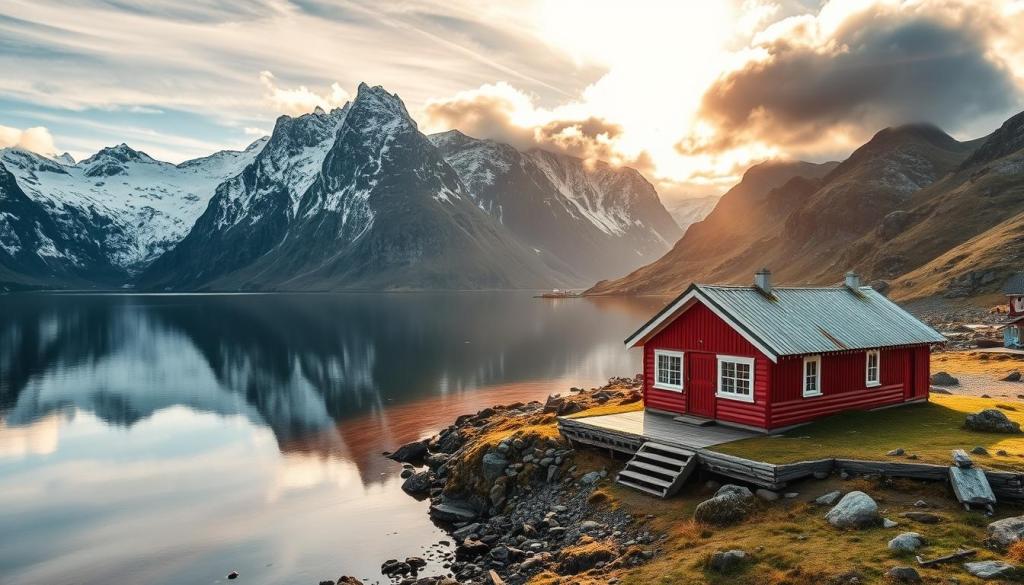
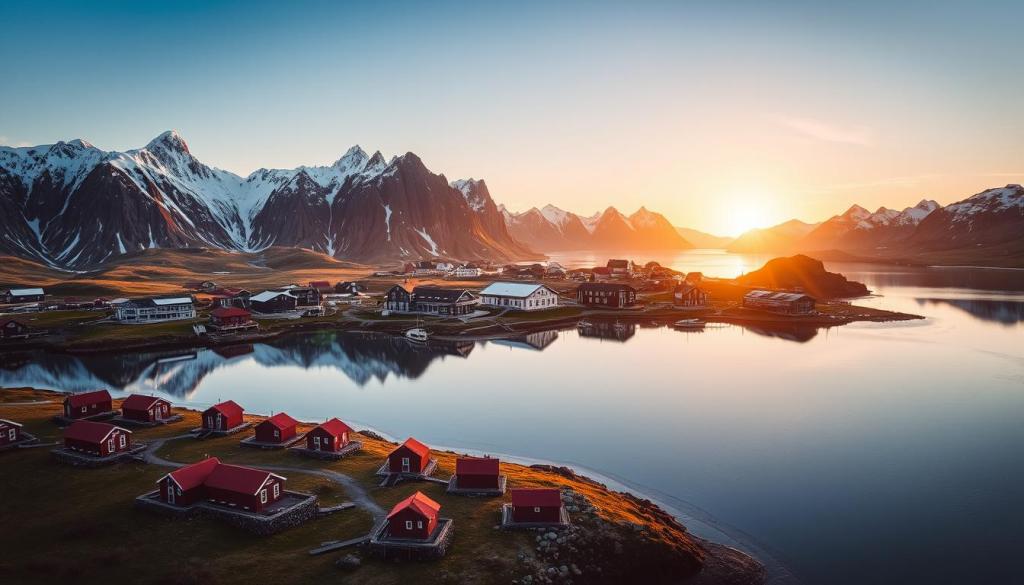
Stay in rorbuer cabins Norway for a taste of history. These colorful cabins were homes for fishermen. They sit by the water in places like Reine and Nusfjord.
Inside, you’ll find open-fire stoves and amazing sea views. Many have WiFi, but some don’t have kitchens.
Hotels and Guesthouses
For a more comfortable stay, try luxury hotels Norwegian archipelago like Henningsvær Hotel. They mix modern luxury with coastal beauty. Mid-range places like Lofoten Kystshotell offer great views and easy hiking access.
For a budget, guesthouses in villages like Svolvær are a good choice.
Camping and Outdoor Lodging
For outdoor lovers, Lofoten camping sites like Vestfjord Camping are perfect. You can also camp in the wild under Norway’s allemannsretten law. Just stay 150 meters from roads and homes.
Glamping sites offer tents with beds and heaters. They’re a mix of camping and comfort.
- Book best places to stay in Lofoten 6 months early in peak season (June–August).
- Check what your cabin has: Some rorbuer don’t have private bathrooms.
- Wild campers must take all trash and respect wildlife.
Whether you want a cabin, a spa hotel, or a tent under the midnight sun, Lofoten has it all. Your stay will be unforgettable.
Taste of the Arctic: Local Cuisine and Dining Experiences
Explore the Norwegian Arctic cuisine in the Lofoten Islands. Here, the sea and tradition blend beautifully. Enjoy stockfish Norway specialties and fresh catches, each telling a story of survival and innovation.
For over a thousand years, stockfish (tørrfisk) has been a key part of local food. Dried cod, air-cured on racks, is a local treasure. Try it with sharp cheese or dark rye bread for a taste of history. Don’t miss lutefisk, a gelatinous cod dish, or boknafisk, a semi-dried version great in soups.
For fresh seafood, Lofoten seafood restaurants are the place to be. Here are some top spots:
| Restaurant | Location | Specialty |
|---|---|---|
| Fiskekroken | Henningsvær | Grilled cod with local herbs |
| Lofotkrogen | Svolvær | Halibut carpaccio with cloudberries |
| Fiskerestaurant Haukland | Nusfjord | Smoked salmon platters |
“The fish here swims in icy waters one minute, on your plate the next.” – Lofoten chef, Elin Sørensen
Check out best restaurants Lofoten Islands for a mix of tradition and creativity. Try Fiskekroken for stunning sea views and meals. For a budget-friendly option, visit Rorbuer cafés for open-faced fish sandwiches and pickled herring.
Visit in summer for seafood festivals or winter for reindeer stew. Enjoy local aquavit or juniper berry liqueur with your meal. Whether it’s stockfish Norway specialties or modern dishes, your taste buds will travel through Arctic culinary history.
Conclusion: Making the Most of Your Lofoten Islands Adventure
Planning a trip to the Lofoten Islands? Whether it’s for 3 days or a week, it’s all about balance. Start with must-see spots like Reinefjord and the Lofoten Wall. But also leave time for unexpected finds. Lofoten Islands travel tips include packing layers for the weather and being flexible for the midnight sun or northern lights.
When to go is important. Off-season Lofoten travel means fewer people and special light for photographers. Dawn and dusk are best for capturing stunning views. Always use tripods in the dark and respect nature to protect it.
Being green is crucial. Follow sustainable tourism Norway by staying on trails, choosing eco-friendly places to stay, and avoiding plastic. Talk to local guides to learn about fishing and seafood markets. This way, your visit helps the community.
Don’t forget a power adapter for Norwegian outlets, and most locals speak English. Be quiet in rural areas and save firewood for nature. Enjoying the fjords or trying rakfisk makes a difference. Plan well, travel right, and the Lofoten Islands will touch your heart. Let’s keep it beautiful for everyone.
FAQ
What is the best time to visit the Lofoten Islands?
The best time to visit the Lofoten Islands depends on what you want to see. Summer (June-August) offers 24 hours of daylight, perfect for the midnight sun. Winter (November-March) is great for the northern lights. Each season has its own charm and activities.
How do I get to the Lofoten Islands?
To get to the Lofoten Islands, fly into Oslo, Bergen, or Trondheim first. Then, take a regional flight to Leknes or Svolvær. Or, drive along the E10 highway for a scenic trip. Ferries also connect the islands, making exploration fun.
What types of accommodation are available in Lofoten?
You can find many places to stay, like traditional rorbuer (fishermen’s cabins) and boutique hotels. There are also guesthouses and campgrounds. Choose from cozy cabins with views or luxury hotels, based on your preference.
Are there any special outdoor activities in Lofoten?
Yes! Lofoten offers many outdoor activities. You can hike iconic peaks, kayak through fjords, or surf at certain beaches. Fishing tours and wildlife spotting, like whales and sea eagles, are also available.
What local cuisine should I try while in Lofoten?
Try stockfish, a traditional dried cod, and fresh catches of cod and salmon. Don’t miss reindeer dishes and desserts with cloudberries. Visit local eateries for a true taste of the Arctic!
Is it possible to do photography in the Lofoten Islands?
Yes, the Lofoten Islands are perfect for photography! With stunning landscapes and dramatic peaks, you’ll want to capture everything. The best times are during sunrise and sunset, especially in winter and summer.
How can I responsibly enjoy the Lofoten Islands?
To enjoy the Lofoten Islands responsibly, follow Leave No Trace principles. Respect local communities and support sustainable businesses. Your actions help keep the islands beautiful for others to enjoy.


WELCOM>>Give a rating for my site