


Welcome to our guide on fitness. We’ll explore Pilates, running, yoga, and assistive devices. This is for everyone, whether you’re experienced or just starting. You’ll find tips to boost your health and well-being.
Key Takeaways
- Discover the core strengthening benefits of Pilates and how to incorporate it into your fitness regimen.
- Explore training plans for beginner runners to help you hit the ground running with confidence.
- Understand the various styles of yoga and how they can enhance your mind-body connection.
- Learn about the range of assistive devices available to support your fitness goals, from sports equipment to running aids.
- Gain a holistic understanding of how these fitness practices can be integrated to achieve your desired results.
Unleashing the Power of Pilates
Pilates is a fitness method that strengthens the core, improves posture, and boosts body control. It offers many benefits for those looking to improve their physical and mental health.
Core Strengthening Benefits
Pilates focuses on strengthening the core. It works the deep muscles in the abdomen, back, and hips. This improves body alignment, reduces injury risk, and boosts athletic performance.
Regular Pilates practice strengthens the spine, improves balance, and increases muscle endurance.
Pilates Equipment Guide
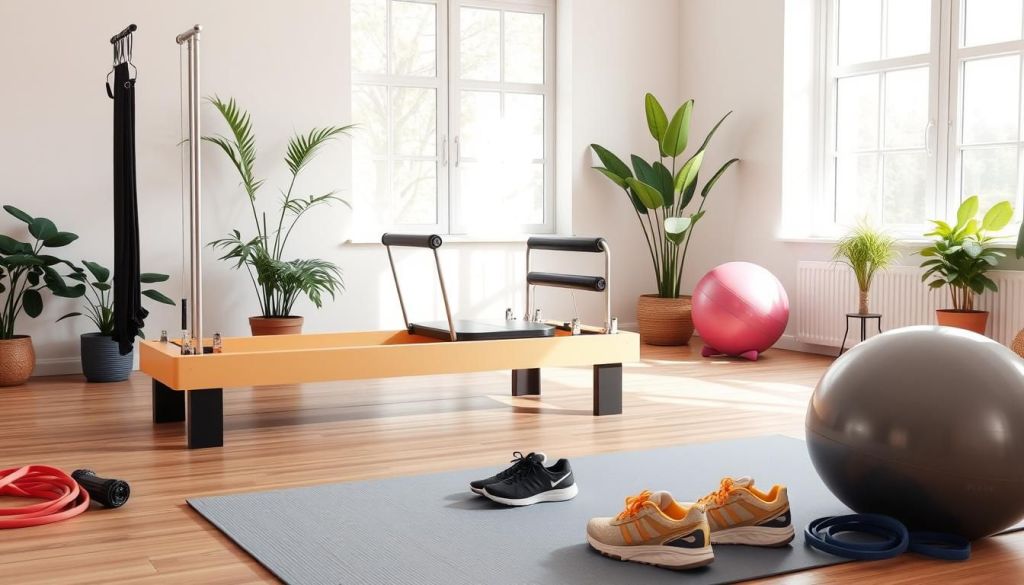
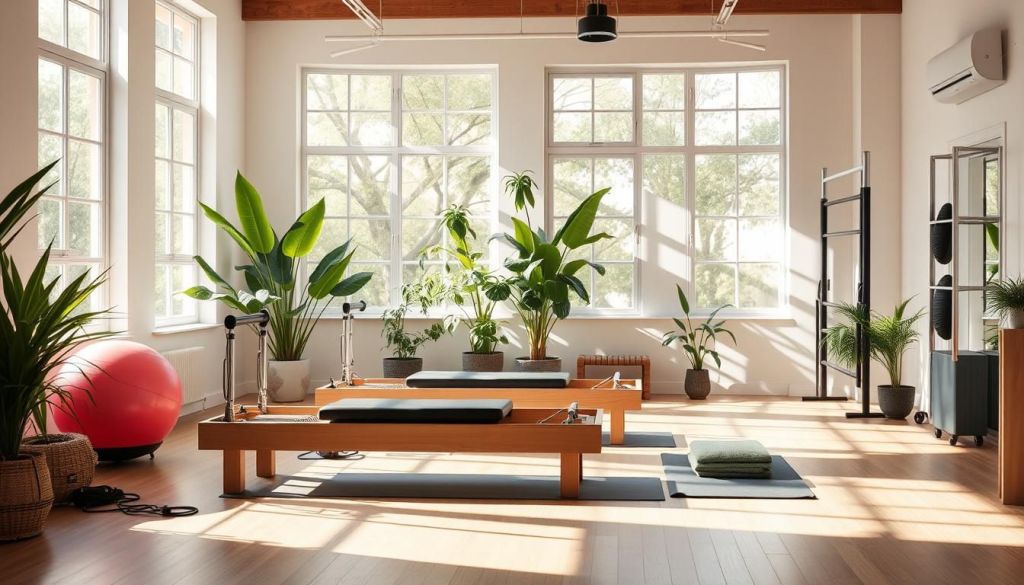
Pilates equipment can enhance your practice. The Pilates reformer and Pilates ball are just a few examples. These tools challenge your body, increase resistance, and target specific muscles.
Exploring different Pilates equipment can make your workouts more personalized and effective.
- Pilates Reformer: A sliding platform with springs and pulleys, it provides resistance and support for various exercises.
- Pilates Ball: Also known as the stability ball, it’s great for core exercises, balance, and more.
- Pilates Ring: This circular tool, also called the Magic Circle, targets specific muscles like the inner thighs and arms.
Using Pilates equipment can elevate your practice. It helps build core strength, improve muscle tone, and enhance body control.
“Pilates is a complete coordination of body, mind, and spirit.” – Joseph Pilates
Hitting the Ground Running
Running is a favorite way to stay fit and offers many health benefits. It boosts your heart health and improves your mood. For new runners, a good training plan is key to reaching their goals safely and effectively.
Training Plans for Beginners
Creating a detailed running plan is crucial for beginners. These plans should slowly increase your run time and intensity. This lets your body get used to it and build endurance.
By sticking to a well-made plan, you can avoid common mistakes like overtraining or injury. These issues often stop new runners from continuing.
Here are some important points to think about when making a beginner’s running plan:
- Begin with a mix of running and walking. Start with short runs and breaks to build stamina.
- Slowly increase your run time and distance over weeks. Try to add no more than 10% to your weekly miles to avoid injury.
- Add strength training and flexibility exercises to support your running and lower injury risk.
- Make sure to include regular rest days and recovery periods to help your body adapt and prevent burnout.
By sticking to a structured plan that fits your fitness level and goals, you can start your running journey with confidence. You’ll become a stronger, more experienced runner over time. Training Plan Duration Weekly Mileage Beginner 5K 12 weeks 15-25 miles Beginner 10K 16 weeks 20-35 miles Beginner Half Marathon 20 weeks 25-45 miles
“Running is not just about fitness, it’s also a mental game. Having a well-structured training plan can help you stay motivated and achieve your goals.”
Fitness -Pilates – Running – Yoga – Assistive Devices
Fitness isn’t one-size-fits-all. Pilates strengthens the core, running boosts heart health, and yoga unites body and mind. Assistive devices also play a big role in fitness.
Pilates shapes a strong core, running is great for endurance, and yoga combines physical and mental focus. Each has its own benefits, fitting different goals and needs.
Being flexible in fitness is key. Mixing activities creates a balanced routine. Assistive devices like treadmills and yoga mats can also boost workouts. Fitness Discipline Primary Benefits Recommended Assistive Devices PilatesCore strengthening, posture improvement, flexibility enhancement Pilates reformer, stability balls, resistance bands Running Cardiovascular fitness, endurance building, weight management Treadmill, running shoes, GPS watches Yoga Improved flexibility, stress reduction, mind-body connection Yoga mats, blocks, straps, bolsters
Knowing the benefits of each fitness type and using assistive devices helps create a tailored fitness plan. This plan supports reaching health and fitness goals.
Yoga: A Journey of Mind and Body
Yoga is more than just physical postures. It combines movement, breathing, and mindfulness for total well-being. By trying different yoga styles, you can find what suits your fitness goals and likes best.
Exploring Different Yoga Styles
Yoga has many styles, from fast-paced Vinyasa flow to calm Hatha yoga. Each style offers unique benefits. This lets you customize your practice to fit your needs.
- Vinyasa Yoga: A flowing, dynamic practice that synchronizes breath with movement, promoting cardiovascular fitness and muscle strength.
- Hatha Yoga: A gentle, tranquil style that focuses on physical postures and breathing exercises, emphasizing relaxation and stress relief.
- Ashtanga Yoga: A rigorous, physically demanding practice that follows a set sequence of postures, building endurance and flexibility.
- Restorative Yoga: A soothing, nurturing style that utilizes props to support the body, encouraging deep relaxation and healing.
- Yin Yoga: A slow-paced practice that targets the connective tissues, promoting joint mobility and a meditative state of mind.
No matter your experience or fitness level, yoga has many yoga styles to try. It’s a journey of physical, mental, and spiritual growth.
Assistive Devices: Enhancing Your Workout
Having the right gear is key to a good workout. Assistive devices can really help, whether you’re an experienced athlete or just starting out. They offer support, improve performance, and help prevent injuries.
Sports Equipment for Running
Running is a great exercise, but it can be tough on the body. Luckily, there’s special equipment to make running better and safer. From advanced running shoes to braces and supports, these tools help you get the most from your workouts.
Here are some top picks for runners:
- Supportive running shoes: A good pair can greatly improve comfort and performance. Look for shoes with cushioning, stability, and support to protect your joints.
- Running braces and supports: These can add stability and protection, especially for those prone to injuries or with existing conditions.
- Compression socks and sleeves: They improve blood flow, reduce muscle fatigue, and prevent cramps during runs.
- GPS and heart rate monitors: These tools track your speed, distance, and heart rate, helping you train better and see your progress.
Using these assistive devices can make running better and safer. It helps you reach your fitness goals without worrying about injuries. Assistive Device Benefits Considerations Supportive Running Shoes Cushioning, stability, and support to minimize impact on joints Proper fit and replacement of worn-out shoes Running Braces and Supports Additional stability and protection for injury-prone areas Comfort and adjustability for individual needs Compression Socks and Sleeves Improved blood circulation, reduced muscle fatigue, and prevention of cramps Proper fit and compression level for individual needs GPS and Heart Rate Monitors Tracking of speed, distance, and heart rate for optimized training Compatibility with user’s fitness level and goals
Using these assistive devices can make running better and safer. It helps you reach your fitness goals without worrying about injuries.
Conclusion
In this article, we’ve looked into the exciting world of fitness. We’ve covered Pilates, running, yoga, and the use of assistive devices. Now, you can mix these to make a fitness plan that boosts your health and happiness.
Pilates strengthens your core, running is thrilling, and yoga is holistic. This article shows how to balance these for a fulfilling fitness life. It also shows how technology can make fitness better and more fun.
Starting your fitness journey? Find the right mix of activities that fit your goals and likes. Use what you’ve learned here to improve your health and become a more vibrant you.
FAQ
What are the key benefits of Pilates?
Pilates strengthens your core. It improves your posture and body control. It also boosts your overall physical health.
What essential Pilates equipment should I consider?
You’ll need a Pilates mat and resistance bands. Stability balls and Pilates reformer machines are also key. They help you reach your fitness goals.
How do I start a running program as a beginner?
Start with a beginner’s training plan. It should slowly increase your run time and intensity. This lets your body get used to it and build endurance safely.
What are the different styles of yoga, and how do I choose the right one?
Yoga has many styles, from gentle to challenging. Try different ones to find what fits your fitness level and goals. Choose what feels right for you.
How can assistive devices enhance my running and overall fitness routine?
Tools like running shoes and fitness trackers help a lot. They support your performance and prevent injuries. This makes reaching your fitness goals easier.



Leave a Reply to Uğurcan BAL Cancel reply