Cleopatra’s: Use of Lapis Lazuli in Ancient Egypt#()


Did you know Queen Cleopatra of ancient Egypt used a powerful blue gemstone to win over her people and lovers? Lapis lazuli, a highly valued mineral, was a favorite of hers. Its use in her reign shows us a lot about ancient culture and medicine.

Lapis stone

Key Takeaways

  • Lapis lazuli was a highly revered and valuable gemstone in ancient Egypt, used for decorative and medicinal purposes.
  • Cleopatra, the last pharaoh of ancient Egypt, was known to have utilized lapis lazuli extensively in her beauty regimens and political strategies.
  • The deep blue color of lapis lazuli held profound symbolic meaning, representing power, royalty, and the divine in ancient Egyptian culture.
  • Cleopatra’s use of lapis lazuli highlights the gemstone’s multifaceted role in the ancient world, from its aesthetic appeal to its perceived healing properties.
  • Exploring Cleopatra’s relationship with lapis lazuli offers a unique window into the intersections of history, culture, and the enduring allure of this captivating blue stone.

The Mystical Allure of Lapis Lazuli in Ancient Egypt

Lapis lazuli, the captivating blue stone, was highly valued in ancient Egypt. It was prized for its vibrant hue and divine connection. The Egyptian elite, including Queen Cleopatra, sought it eagerly.

Origins and Symbolism

Lapis lazuli came from Afghanistan’s mountains. In ancient Egypt, it symbolized power, wealth, and status. Its deep blue color was seen as a reflection of the heavens.

This made the stone mystical and spiritually significant. Egyptians used it in artwork, jewelry, and rituals. They saw its beauty and its power to connect with the divine.

Cleopatra’s Prized Possession

Cleopatra, the last Egyptian pharaoh, loved lapis lazuli. She used it in jewelry and cosmetics to impress. Its sky and god connection fit her divine right to rule.
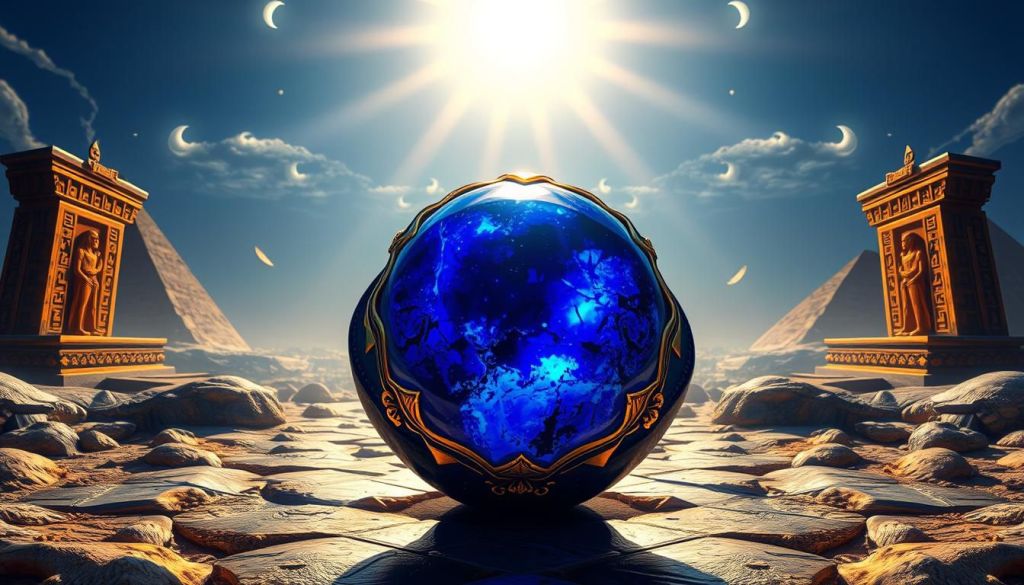
Lapis lazuli’s allure in ancient Egypt was unmatched. It went from Afghanistan’s mountains to the Egyptian elite’s adornments. This blue stone was a powerful symbol in the ancient Nile civilization.

How did Queen Cleopatra use lapis lazuli in treatment? What was its culture amon

Queen Cleopatra of ancient Egypt was known for her use of lapis lazuli. This gemstone was prized for its bright blue color. It was not just for decoration but also for its medicinal and cosmetic uses.

In ancient Egyptian culture, lapis lazuli was highly valued. Cleopatra used it in her beauty routines. She ground it into powder for eye makeup, making her eyes stand out and showing her power. She also used it in treatments to improve skin health and look.

  • Lapis lazuli was used in ancient Egyptian cosmetics to create vibrant blue eye shadow and eyeliner, accentuating the eyes and lending an air of regal elegance.
  • The gemstone was also ground into a paste and applied to the skin as a rejuvenating treatment, harnessing its purported benefits for complexion and overall well-being.
  • In addition to its cosmetic uses, lapis lazuli was believed to have medicinal properties and was incorporated into various herbal remedies and tonics to address a range of ailments.

Lapis lazuli was more than just a gemstone in ancient Egypt. It was seen as a symbol of wisdom, truth, and the divine. It was used in religious ceremonies, burial rituals, and royal adornments.

“Lapis lazuli was a symbol of the heavens, of royalty and of the soul. It was prized above all other stones in ancient Egypt.”

Cleopatra’s use of lapis lazuli showed its importance in ancient Egyptian culture. It was valued for its beauty, health benefits, and spiritual meaning. This made lapis lazuli a highly sought-after material during her reign.
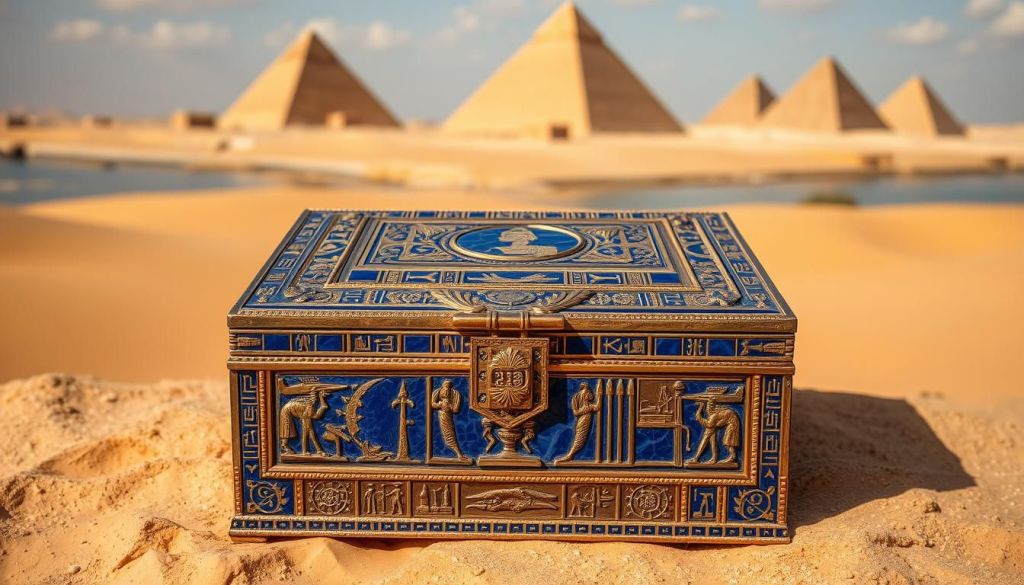
Cleopatra’s box

Conclusion

Cleopatra’s use of lapis lazuli, a precious blue gemstone, has made a lasting mark on ancient Egypt. Her legacy goes beyond her political skills and alliances. She saw lapis lazuli as a symbol of power, beauty, and spiritual importance.

During her time, Cleopatra knew the impact of this blue stone. She used it to look regal, show her divine link, and for healing. This shows how much lapis lazuli meant to her and her people.

Looking back, Cleopatra’s love for lapis lazuli has stood the test of time. This gemstone is a symbol of ancient Egypt’s culture and ingenuity. It reminds us of Cleopatra’s lasting influence and the beauty of lapis lazuli.

FAQ

What is the significance of lapis lazuli in ancient Egyptian culture?

In ancient Egypt, lapis lazuli was a highly valued blue gemstone. It was seen as a symbol of royalty, divinity, and the afterlife. This made it a powerful symbol of power, prestige, and spiritual enlightenment.

How did Queen Cleopatra use lapis lazuli in her daily life?

Cleopatra, the powerful Queen of ancient Egypt, used lapis lazuli in her daily life. She wore it in her jewelry and used it in her cosmetics. She even used it as a pigment for her eye makeup, showing its mystical allure and power.

What were the medicinal and cosmetic uses of lapis lazuli in ancient Egypt?

Lapis lazuli was believed to have healing powers in ancient Egyptian medicine. Cleopatra used lapis lazuli-infused concoctions for skin care and beauty. This showed its value in ancient Egyptian treatments and remedies.

How did the cultural significance of lapis lazuli shape Cleopatra’s legacy?

The use of lapis lazuli by Queen Cleopatra has made her legacy last. Her use of the precious blue stone has made it a key part of ancient Egyptian culture. This has had a lasting impact on history.


Discover more from noga noga

Subscribe to get the latest posts sent to your email.

55 responses to “Cleopatra’s: Use of Lapis Lazuli in Ancient Egypt#()”

  1. The article is very nicely written. Lapis Lazuli is indeed a gifted gemstone and helps in many aspects of life. You can also explore gemstones, crystals, and Rudraksha at my website, https://satvikgems.com/. We have beautiful Gemstones with us to choose from.

    Liked by 1 person

    1. Thank you very much for your presence. Have a nice day and good luck

      Liked by 1 person

  2. ๐Ÿ˜ฏ๐Ÿ‘๐Ÿป Lapis lazuli was a gem appreciated by Cleopatra, how interesting. Thank you for the beautiful images and story noga. Have a nice weekend.

    Liked by 2 people

  3. What a fascinating story and teaching! I think the lapis lazuli stone and the stories of Egypt are beautiful. Thank you for sharing with us. I wish you a great day. ๐Ÿค—๐Ÿ™Œ๐Ÿป๐ŸŒœ๐ŸŒž

    Liked by 2 people

    1. Thank you very much for visiting. Good luck and have a nice day dear

      Liked by 3 people

    1. Thank you very much for visiting. Good luck and have a nice day

      Liked by 2 people

  4. Willie Torres Jr. Avatar
    Willie Torres Jr.

    What an interesting insight into Cleopatra and lapis lazuli. Itโ€™s amazing how much significance that gemstone held in ancient Egyptian culture, both for beauty and healing. I love how it symbolizes power and divinity

    Liked by 2 people

    1. Thank you very much, my dear brother Willy Torres, have a nice day and good luck

      Liked by 3 people

      1. Willie Torres Jr. Avatar
        Willie Torres Jr.

        ๐Ÿค—๐Ÿค—

        Liked by 2 people

        1. ๐Ÿ‘‹๐Ÿป๐Ÿ™‹๐Ÿผโ€โ™€๏ธ

          Liked by 3 people

  5. Here we teach also that to carry or wear some of it assists us to communicate.

    Come to think of it, perhaps I should get some for myself!…

    Liked by 2 people

    1. You will succeed, God willing, my love. I wish you all the best and happiness, Ana

      Liked by 3 people

  6. An interesting read. A lovely stone.

    Liked by 2 people

    1. Thank you very much for visiting. Good luck and have a nice day

      Liked by 2 people

  7. Noga Cleopatra Sultan. Sultan of Egypt๐Ÿ™‡โ€โ™‚๏ธ

    Liked by 2 people

    1. ๐ŸŒทNo, the Sultanate of the Pharaohs was not the kings of my dear brother. Good morning

      Liked by 3 people

      1. The Noga Sultan ๐ŸŒฟ๐ŸŒน๐ŸŒธqueen

        Liked by 2 people

  8. Sister of Cleopatraโ€™s compatriot. You have a red heart, thanks to it, everyone loves you. Always protect your heart ๐Ÿ™๐ŸŒฟ๐ŸŒธBe such a warm-blooded, loving and pleasant conversational person. Iโ€™m glad to have you we love you ๐Ÿ™๐ŸŒธ๐ŸŒฟ๐ŸŒน๐ŸŒน๐ŸŒท๐Ÿ•Š๏ธ๐Ÿ•Š๏ธ

    Liked by 2 people

    1. Oh, all of this, may God make you happy, protect you, and grant you success, Lord uฤŸucan bal ๐ŸŒน๐ŸŒน

      Liked by 3 people

      1. Amin Noga sister ๐Ÿคฒ๐ŸŒฟthank you so much for best prayer ๐ŸŒฟ๐ŸŒน๐Ÿคฃ

        Liked by 1 person

      2. Thank you so much ๐ŸŒฟ๐ŸŒธ๐ŸŒน

        Liked by 2 people

  9. Very interesting and fascinating post ๐Ÿ‘๐Ÿ‘๐Ÿ‘

    Liked by 2 people

    1. Thank you very much, Aleta. Best wishes and prayers for you

      Liked by 2 people

  10. usuallyloving1f7b6f3d38 Avatar
    usuallyloving1f7b6f3d38

    Sounds as if Cleopatra used a type of crystal and stone healing. I sometimes use crystals when doing

    Reiki. Crystals and stones might be able to remove negative energies, while giving positive ones

    Claude

    Liked by 2 people

    1. Yes, it gives positive energies and helps in healing, like all precious metals. My dear brother, good morning, roses and jasmine.

      Liked by 2 people

      1. usuallyloving1f7b6f3d38 Avatar
        usuallyloving1f7b6f3d38

        Good morning back to you my good sister

        Claude

        Liked by 2 people

        1. Thank you very much, my dear brother, usually loving

          Liked by 2 people

  11. Beautiful painting pigment ๐Ÿ˜

    Liked by 1 person

    1. Thank you very much for visiting. Good luck and have a nice day sara

      Liked by 2 people

  12. Thanks for sharing this Noga, interesting to read.

    Liked by 1 person

    1. Thank you very much, Farid. Good luck and have a nice day, dear

      Liked by 2 people

      1. You’re welcome and have a nice day Noga.

        Liked by 1 person

        1. ๐Ÿ˜May God make you happy and make your heart and your life happy

          Liked by 2 people

          1. A very good morning Noga.

            Liked by 1 person

          2. Thank you very much Farid

            Liked by 2 people

          3. You’re welcome Noga.

            Liked by 1 person

  13. This is an excellent post, your culture is very interesting. Very well written with amazing photos. I am really glad when I find your these kind of posts. I like very much this blue color, it is so deep!!

    Liked by 1 person

    1. ๐Ÿ™๐Ÿป๐ŸŒบ๐ŸŒบI am glad you enjoyed the article. Thank you very much. I wish you success and happiness always, Jean Vivace

      Liked by 2 people

  14. It is such a beautiful stone. Hope you have a great day!

    Liked by 2 people

    1. ๐ŸŒน๐ŸŒนAnd to you too, my beloved Rojie

      Liked by 2 people

  15. Great post! The historical context around lapis lazuli adds so much depth to Cleopatraโ€™s story. It’s amazing to think of how ancient Egyptians viewed the world and the materials they prized.๐Ÿค๐Ÿ‘๐ŸŒท

    Liked by 1 person

    1. Yes, my brother, the Pharaohs, science and research still have not discovered how they achieved all this progress thousands of years ago.

      Liked by 2 people

      1. ๐Ÿ‘๐ŸŽ‰๐Ÿค๐ŸŒท

        Liked by 1 person

    2. Thank you very much, I wish you good luck, happiness and success

      Liked by 2 people

  16. waleed youssief ๐Ÿ‡ช๐Ÿ‡ฌ Avatar
    waleed youssief ๐Ÿ‡ช๐Ÿ‡ฌ

    Queen Cleopatra is a great mystery

    Liked by 1 person

    1. Yes, Waleed, it still boggles minds. Thank you very much. Good luck and have a good day

      Liked by 2 people

  17. Lapis lazuli is a deep-blue metamorphic rock prized for its intense color and unique composition. Known since antiquity, it has been used in jewelry, decorative items, and even in art as a pigment, especially in paintings. This semi-precious stone is a combination of minerals, primarily lazurite, which gives it its blue color, along with calcite, pyrite, and other trace minerals that create the characteristic gold specks and slight white veins.

    Here are some interesting details about lapis lazuli:

    History and Symbolism: Lapis lazuli has been mined for over 6,000 years, particularly from the Badakhshan region in Afghanistan, which remains a primary source. Ancient Egyptians used it in jewelry and cosmetics, often associated with royalty and divinity. It was also a symbol of truth and wisdom for various ancient cultures.
    Ultramarine Pigment: In the Renaissance and Baroque periods, lapis lazuli was ground to make the ultramarine pigment, one of the most vibrant and expensive blue pigments. Artists used it for painting the robes of the Virgin Mary, as it was considered a symbol of purity and holiness.
    Metaphysical Properties: Lapis lazuli is believed to promote self-awareness, clarity, and inner truth. It’s often associated with the throat and third-eye chakras, encouraging communication, intuition, and insight.
    Appearance and Quality: The highest quality lapis lazuli stones have a rich, intense blue with minimal calcite (white veins) and a fine scattering of pyrite (gold flecks). Lower grades have more calcite, leading to a lighter color.
    Modern Use: Today, lapis lazuli is popular in jewelry, mosaics, carvings, and interior design. It remains valued for its historical significance and aesthetic beauty, with larger, deep-blue specimens often fetching high prices.

    Lapis lazuliโ€™s allure lies in its deep, celestial blue and rich historical roots, making it a unique and timeless gemstone.

    Liked by 2 people

    1. ๐Ÿ˜Thank you very much for visiting Sasan. I wish you success and happiness always

      Liked by 2 people

      1. I am always looking for you post to read it but I don’t find it. It’s OK we are here now

        Liked by 1 person

        1. ๐Ÿ˜Why can’t you find it? Is there a problem with the blog? In any case, thank you for your visit. May God make you happy and protect you, Sasan.

          Liked by 2 people

          1. Everything ๐Ÿ‘‹ good by you web . It’s fresh.

            Like

  18. Nice
    Good morning Noga
    ๐Ÿ™๐ŸŒน๐Ÿ™Œ๐Ÿป๐ŸŒน

    Aum Shanti

    Liked by 1 person

    1. Thank you very much shivatje
      ๐Ÿ˜Good morning and happiness to you

      Liked by 2 people

Leave a Reply to shivatje Cancel reply

Your email address will not be published. Required fields are marked *

Discover more from noga noga

Subscribe now to keep reading and get access to the full archive.

Continue reading