


Homemade yogurt is a tasty and healthy treat you can make at home. It’s great for saving money, trying new flavors, or enjoying the DIY process. This guide will show you how to make and decorate your own yogurt. You’ll learn about the right ingredients, tools, and techniques to create your own yogurt masterpieces.

Key Takeaways
- Learn the essential ingredients and equipment needed for homemade yogurt making
- Discover the optimal temperature ranges and incubation methods for perfect yogurt
- Explore creative decorating ideas using fresh fruits, nuts, seeds, and more
- Understand proper storage and shelf life guidelines for your homemade yogurt
- Gain the confidence to make delicious, customized yogurt in your own kitchen
Essential Ingredients and Equipment for Homemade Yogurt Making
Making homemade yogurt is easy with the right ingredients and tools. You need to pick the best milk and starter culture. These choices are key to making great yogurt.
Choosing the Right Milk for Your Yogurt
The milk you pick is the base of your yogurt. Cow’s milk is common, but you can try goat, sheep, or plant-based milks like almond or soy. Each milk gives a different taste and texture, so try them all to find your favorite.
Must-Have Tools and Equipment
- A heavy-bottomed saucepan or yogurt maker for heating and culturing the milk
- A thermometer to monitor the temperature precisely
- A whisk or spoon for stirring and incorporating the yogurt starter culture
- Clean, sterilized jars or containers for storing the finished yogurt
- An incubator or heated pad to maintain the optimal temperature during the culturing process
Starter Culture Options and Selection
The yogurt starter culture turns milk into creamy yogurt. You can use powdered, frozen, or a bit of your last batch. Each starter adds its own bacteria, changing the taste and texture of your yogurt.
With the right yogurt ingredients, milk types, and tools, you’re ready to make tasty homemade yogurt at home.
Step-by-Step Process of Making Basic Yogurt at Home
Making homemade yogurt is easy and rewarding. It doesn’t matter if you’re new or experienced. Just follow these simple steps to make creamy, tangy yogurt in your kitchen.
- Heat the Milk: Pour the milk into a saucepan and heat it on medium, stirring often. Aim for 180-190°F (82-88°C). This kills bacteria and gets the milk ready for culturing.
- Cool the Milk: After reaching the temperature, take it off the heat. Let it cool to 110-115°F (43-46°C). This is perfect for the yogurt culture to grow.
- Add the Yogurt Starter: Take a bit of cooled milk and mix in your yogurt starter. This can be store-bought or homemade yogurt. Whisk it well into the rest of the milk.
- Incubate the Yogurt: Pour the milk-culture mix into a clean container. Keep it warm, like in a yogurt maker or oven with the light on. Keep the temperature at 110-115°F (43-46°C) for 6-8 hours, until it’s thick.
- Refrigerate the Yogurt: Once incubated, put the yogurt in the fridge. Chill for at least 4 hours, until it’s fully set and cool.
With these steps, you can make your own delicious yogurt. Try different milks, starters, and incubation methods to find your favorite. Step Temperature Time Heat the Milk 180-190°F (82-88°C) N/A Cool the Milk 110-115°F (43-46°C) N/A Incubate the Yogurt 110-115°F (43-46°C) 6-8 hours Refrigerate the Yogurt Chilled At least 4 hours
By following these yogurt-making steps, you can make a homemade yogurt that’s tasty and healthy. Enjoy the yogurt recipe you’ve made yourself!
Temperature Control and Incubation Techniques
Getting the temperature right is key for making great yogurt. The incubation process needs careful temperature control. This ensures the yogurt fermentation goes well and the yogurt gets that tangy taste.
Optimal Temperature Ranges
The best temperature for incubation is between 100-110°F (37-43°C). This range helps the yogurt culture grow. It also makes the milk turn into thick, creamy yogurt. If the temperature is off, the yogurt incubation can slow down or stop.
Different Incubation Methods
- Oven Incubation: Put the yogurt-filled jars in a warm oven (with the light on) at the right temperature.
- Yogurt Maker: Use a yogurt maker to control the temperature control for easy yogurt making.
- Insulated Container: Wrap the containers in towels or use an insulated cooler to keep the warmth.
Troubleshooting Common Temperature Issues
If the temperature is too low, the yogurt might not set right. It could taste sour. On the other hand, too high a temperature can kill the culture. This makes the yogurt thin and watery. By watching the temperature control closely and adjusting as needed, you can make great yogurt every time. Temperature Issue Possible Causes Solutions Temperature Too Low – Oven not warm enough
– Insulated container not retaining heat – Increase oven temperature
– Use a warmer insulated container Temperature Too High – Oven temperature too high
– Yogurt maker malfunctioning – Decrease oven temperature
– Check and calibrate yogurt maker
Knowing the right temperature and using the best incubation methods helps you make delicious homemade yogurt every time.
How to prepare yogurt, combine ingredients to decorate it, and learn about its h
Congratulations! You’ve made your own delicious homemade yogurt. Now, let’s decorate it with tasty toppings. This will make your yogurt look great and add to its health benefits.
For yogurt preparation, you have many choices. Move your yogurt into bowls or cups. This makes it easy to add your favorite decorations.
Topping Ideas for Yogurt Decoration
- Fresh seasonal fruits like berries, sliced peaches, or diced mango
- Crunchy granola, nuts, or seeds for added texture
- A drizzle of honey, maple syrup, or fruit preserves for a touch of sweetness
- Sprinkle of cinnamon, cocoa powder, or vanilla extract for a flavor boost
- Chopped herbs like mint or basil for a savory twist
To make your yogurt decorations look good, mix colors, textures, and flavors. Arrange toppings in a way that looks nice. Be creative!
Unlocking the Health Benefits of Homemade Yogurt
Homemade yogurt is not just pretty. It’s also full of health benefits. It has probiotics for better digestion and is packed with protein, calcium, and more.
Using fresh ingredients in your yogurt makes it even healthier. Enjoy the taste, texture, and health perks of your homemade yogurt!
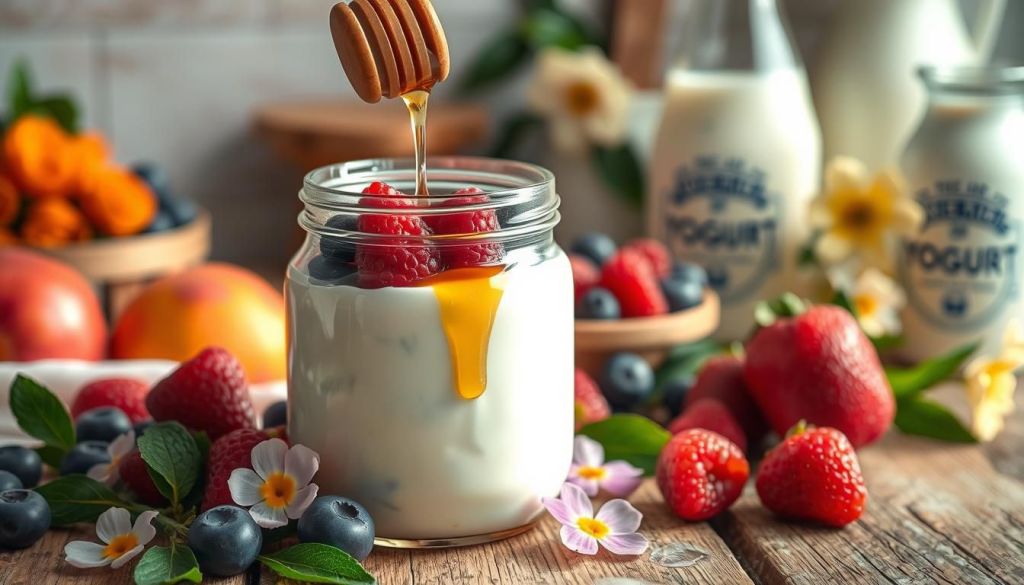
Creative Yogurt Decorating Ideas and Toppings
Make your homemade yogurt stand out with tasty toppings and decorations. You can use fresh fruit, berries, nuts, and seeds. These ingredients can turn a simple yogurt into a beautiful dish.
Fresh Fruit and Berry Combinations
Try adding sliced strawberries, juicy blueberries, and kiwi slices to your yogurt parfait or fruit yogurt. They bring color and sweetness. Mix different fruits to find your favorite taste.
Nuts, Seeds, and Granola Options
Add toasted almonds, crunchy pecans, or chia seeds for texture and crunch. Granola is also great, offering a nice contrast to the yogurt.
Sweet and Savory Topping Ideas
For sweetness, drizzle honey or maple syrup. For a savory yogurt, try black pepper, curry powder, or your favorite chutney or jam.
“Yogurt is a canvas waiting to be painted with delicious and creative toppings.”
Be creative with yogurt toppings to excite your taste buds and wow your guests. The right mix can make your yogurt a stunning and tasty masterpiece.
Storage Tips and Shelf Life Guidelines
Keeping your homemade yogurt fresh is key. To do this, follow these storage tips and shelf life guidelines.
Use airtight containers or jars to store your yogurt. This prevents contamination and keeps air out. Refrigerate it at temperatures below 40°F (4°C) to slow down harmful bacteria growth. Your yogurt can last 7-10 days in the fridge, depending on the starter culture and recipe.
Avoid leaving your yogurt at room temperature for too long. Refrigerate it and use it within the recommended time. If you notice an off smell, texture change, or mold, throw it away for safety.
FAQ
What are the essential ingredients and equipment needed for making homemade yogurt?
You’ll need milk, a yogurt starter culture, and optional flavorings or sweeteners. You’ll also need a cooking pot, a yogurt maker or incubator, a thermometer, and clean jars or containers.
How do I choose the right milk for making homemade yogurt?
The milk you choose affects the yogurt’s texture and taste. Whole milk, 2% milk, and plant-based milks like almond or soy milk work well. Whole milk makes a richer, creamier yogurt.
What are the different starter culture options for homemade yogurt?
You can use commercial yogurt, powdered yogurt starter, or save a portion of your previous batch. The starter you choose influences the yogurt’s flavor, texture, and tanginess.
How do I properly control the temperature and incubate the yogurt?
Keeping the temperature between 110°F and 115°F is key for good fermentation. You can use a yogurt maker, a warm oven, or a cooler with heated water for incubation.
What are some creative ways to decorate and top homemade yogurt?
You can get creative with toppings! Try adding fresh fruit, berries, nuts, granola, honey, jam, or even savory toppings like chopped herbs, spices, or roasted vegetables.
How long does homemade yogurt last, and how should it be stored?
Homemade yogurt lasts 1-2 weeks in the fridge if stored right. Keep it in clean, airtight containers and avoid warm temperatures or contaminants.



Leave a Reply to justrojie Cancel reply