


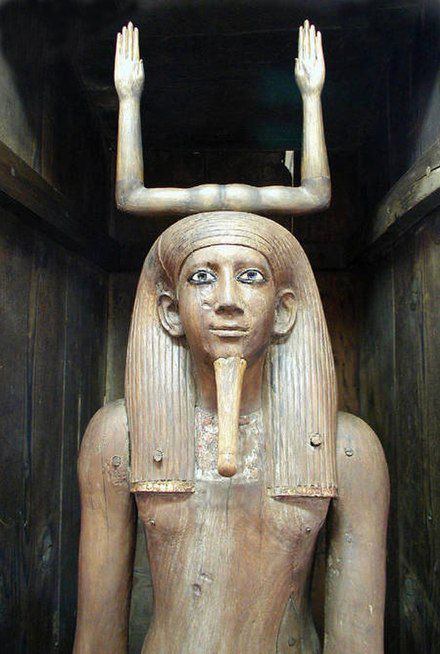

Ka* Pharaoh “Hor “of the Thirteenth Dynasty. At the Egyptian Museum in Cairo. #
The* Ka*, as the ancient Egyptians believed, is the soul of the dead that remains after him, as the ancient Egyptians thought. They used to put food in the graves so that the ka could feed. The Ka is the good spirit in their belief. They depicted the *Ka* in the same image as the person himself, as she is his consort and the one who remains after his death. For them, perhaps, Ka was what we now call “the soul.” In their ethics, they believed that whoever steals something from the property of a dead person, or whoever steals something from the property of a Pharaoh, especially a dead Pharaoh, a curse will be sent upon him as if he were dead, causing him to get into trouble. In some texts, there is a saying that means: “Do something good for your father during your life that will benefit him after your death.”
.
The mother of the soul is *Ba* *among the ancient Egyptians (the Pharaohs).
The ancient Egyptian believed that there were three types of souls that participated with the body in creating a human being: the Ka, the Ba, and the Ak. An akh is a type of soul that a dead person acquires after his death and turns into an akh. It differs from the Ka and Ba that accompany a person during his life. After his death, the ka and ba play an important role for the family and relatives of the deceased. According to ancient Egyptian beliefs, the ka and the ba remain separate from each other, and each of them has a role in a person’s life and after his death, as the link between the “soul” and the dead body remains. The ancient Egyptian believed in posthumous resurrection and in reckoning for his deeds in this world before Osiris. In the era of the Old Dynasty, it seems that the Ba was limited to the Pharaoh only, and the task of the family of the ordinary deceased was to provide offerings (food and drink) to the deceased Ba in the context of caring for the dead. For them, Ka was the oldest definition and therefore represented the human soul. The Ka did not represent ordinary people, but rather represented the spirit of Pharaon T only



Leave a Reply to जनशक्ति खबर Cancel reply