


Naguib Mahfouz: The Voice of Egypt
Naguib Mahfouz, the Nobel Prize-winning Egyptian author, stands as one of the most prominent literary figures of the 20th century. Born in Cairo in 1911, Mahfouz spent his life weaving intricate tales about the complexities of human life, society, and politics in Egypt. His works, written in exquisite Arabic, bridge the gap between tradition and modernity. His stories delve into the lives of ordinary Egyptians, their struggles, joys, and their deep connection to their roots.
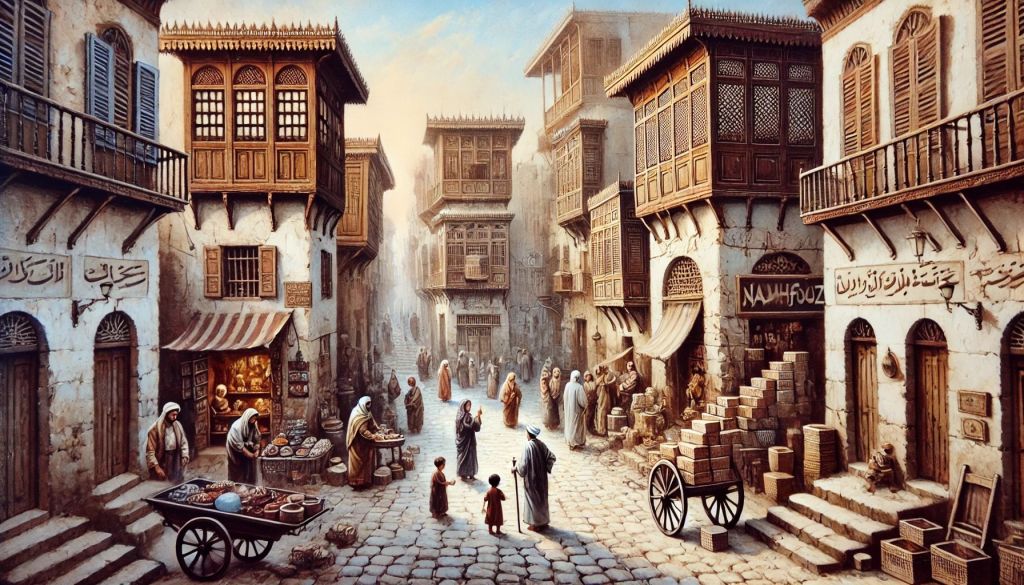
Mahfouz wrote prolifically, producing over 30 novels, hundreds of short stories, and dozens of screenplays. His works often draw upon themes of spirituality, morality, and the interplay of power and poverty. He is best known for his Cairo Trilogy, which vividly portrays the lives of three generations in an Egyptian family. However, The Harafish, one of his most philosophical and symbolic works, occupies a unique space in his literary canon.
The Harafish: A Tale of the Oppressed
The Harafish is not just a novel. it is an exploration of the human condition. The book revolves around a series of interlinked stories spanning generations, set in an unnamed Egyptian alley. The term Harafish refers to the downtrodden, the disenfranchised, and the common folk who populate the lower rungs of society.
The novel captures the cyclical rise and fall of the Ashour family, whose patriarch.
Ashour al-Nagi symbolizes virtue and strength. Ashour’s lineage fluctuates between moments of heroism and decadence, reflecting the moral decay or renewal of the Harafish community. Through their struggles” Mahfouz probes the eternal questions of power justice, and human frailty.
A Touching Tale from the Harafish Stories
One of the most poignant stories within The Harafish focuses on a young woman named Ward. Born into abject poverty, Ward works tirelessly in the hopes of securing a better future for her ailing mother. Despite her efforts, she is subjected to the cruel indifference of a society that deems her invisible.**
One day, as she walks home, Ward witnesses an act of generosity from a local baker named Gohar. Struck by his kindness, she finds solace in his quiet humanity. Gohar, though a member of the Harafish, upholds Ashour al-Nagi’s ideals of justice and compassion. He offers Ward work in his bakery. shielding her from the harsh realities of the world outside.
Their relationship blossoms into a friendship that transcends their suffering. Gohar teaches Ward to see beyond the material struggles of life finding beauty in simplicity and purpose in community. When Gohar eventually sacrifices himself to protect Ward from the wrath of a corrupt gang leader, his act resonates as a testament to the enduring spirit of the Harafish.
Through Ward’s story**Mahfouz reminds readers of the profound resilience of the human spirit and the enduring power of selflessness in the face of despair.*
The Legacy of The Harafish
Naguib Mahfouz’s The Harafish is more than just a narrative; it is a mirror to society’s soul. The novel compels readers to question the structures of power and privilege* and to find empathy for those who dwell in society’s shadows. The stories of the Harafish are timeless, resonating with universal themes of justice dignity and redemption
Through his portrayal of these humble yet profound lives. Mahfouz immortalizes the struggles and aspirations of Egypt’s underprivileged. For those who venture into the alleys of The Harafish, the journey is as enlightening as it is heart-wrenching—a tribute to the unyielding spirit of humanity.



Leave a Reply to Johnbritto Kurusumuthu Cancel reply