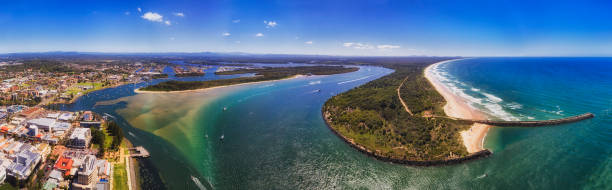
🌊 Marina, Egypt: Your Ultimate North Coast Getaway


Welcome to Marina El Alamein, one of Egypt’s most iconic seaside resorts along the Mediterranean North Coast. Known for its turquoise waters, upscale villas, vibrant nightlife, and hihttps://www.getyourguide.com/nassau-l326/full-day-sail-and-snorkel-with-turtles-t660104/?partner_id=I7SZQRE&utm_medium=online_publisherstorical significance, Marina offers the perfect blend of relaxation, entertainment, and cultural charm.

📍 Where is Marina?

Located about 100 km west of Alexandria, and only 260 km from Cairo, Marina is easily accessible by car via the Alexandria–Matrouh coastal road. The resort town stretches over a wide bay and is divided into multiple “gates” or districts (Marina 1 through Marina 7), each with its own beach, villas, hotels, and attractions.


✈️ How to Get There

By Car: From Cairo, take the Cairo-Alexandria Desert Road, then turn onto the North Coast road to Marina.

By Bus: Buses to El Alamein or Sidi Abdel Rahman are available via major Egyptian transportation companies.

By Plane: Fly into El Alamein International Airport (closest), or Borg El Arab Airport in Alexandria.

📌 Book a flight to El Alamein
🚗 Reserve a rental car
🚌 Check bus schedules


🏖️ Top Attractions and Activities

  1. Private Beaches

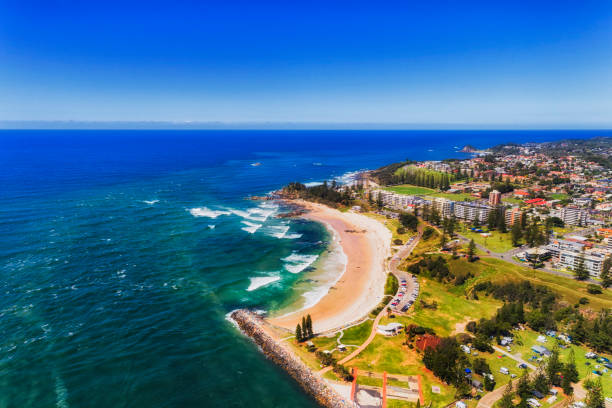
Enjoy some of the most stunning private beaches in Egypt. Each Marina gate has a beach reserved for residents and guests — clean, quiet, and ideal for family fun or couples’ relaxation.

  1. Yacht and Boat Rentals

Rent a yacht or a small boat to cruise the lagoon or the Mediterranean Sea. Perfect for a romantic sunset or group fun.

🚤 Book a yacht or boat ride

  1. Marina El Alamein Archaeological Site

Explore ancient Roman villas, a theater, and early Christian basilicas. A must-visit for history lovers.

🏛️ Visit the Archaeological Museum

  1. Nightlife and Entertainment

Marina lights up after sunset. Enjoy open-air cafes, beach parties, concerts, and exclusive clubs like La Vista Beach Club and 6IX Degrees.

🎶 Reserve a table at Marina Club

  1. Water Sports & Adventure

From jet skiing and banana boats to parasailing and paddleboarding — Marina is a hotspot for water sports.

🌊 Book water activitieshttps://www.getyourguide.com/nassau-l326/full-day-sail-and-snorkel-with-turtles-t660104/?partner_id=I7SZQRE&utm_medium=online_publisher


🏨 Where to Stay

Marina offers a mix of:

Luxury Villas (available for weekly rental)

Beachfront Chalets

Boutique Hotels

Nearby Resorts in Sidi Abdel Rahman

🏠 Browse vacation homes
🏨 Book your stay now


🍽️ Where to Eat

From beach grills to fine dining, you’ll find:

Tamara Lebanese Bistro

Andrea Restaurant

Seafood shacks by the water

Oriental & Egyptian street food

🍴 Reserve a table
🧁 Check top Marina restaurants


🛍️ Shopping & Souvenirs

Marina Mall

Local markets for handmade crafts

Fashion boutiques and beachwear stores

🛍️ See shopping locations
🗓️ Best Time to Visit

The best months to enjoy Marina are:

June to September for peak summer beach vibes

May and October for fewer crowds and pleasant weather


📌 Travel Tips

Book accommodations early – summer season fills up fast.

Marina is a gated community – entry requires rental confirmation or guest pass.

Use local ride apps or rent a car for easier movement between gates.


📷 Gallery

(Include high-resolution images of Marina beaches, villas, archaeological site, and nightlife spots here.)


✅ Plan Your Trip Now

Everything you need to book your dream vacation:https://www.getyourguide.com/nassau-l326/full-day-sail-and-snorkel-with-turtles-t660104/?partner_id=I7SZQRE&utm_medium=online_publisher

✈️ Flights to Marina
🏨 Accommodations
🎟️ Activities & Tours
🚗 Car Rentals
🍽️ Dining Reservations


Discover more from noga noga

Subscribe to get the latest posts sent to your email.

8 responses to “🌊 Marina, Egypt: Your Ultimate North Coast Getaway”

  1. The Vulgate and Lutheran Bible translations so disgusting – eat shit and die – “translations”. What a pathetic joke. Werewolves, Vampires, and Frankenstein … follow with the cowardly lion, down the Yellow Brick Road – Oh my! Following Cults of Personality only produce Mao, Stalin, Hitler and Pol Pot dumbasses.

    John Calvin and Martin Luther, pivotal figures in the Protestant Reformation, each contributing significantly to the movement in distinct ways. Martin Luther (1483-1546), best known for his “95 Theses,” which he famously nailed to the door of the Wittenberg Castle Church in 1517. This document criticized the Catholic Church’s practices, particularly the sale of indulgences, and called for reform.

    His theology emphasized the doctrine of justification by faith alone, arguing that salvation is a gift from God and cannot be earned through good works or church rituals. Asserting that salvation is a gift from God, this theology day and night different from Torah common law as expressed through T’NaCH prophetic mussar common law and Talmudic halachic judicial common law. This prioritization of faith as the pursuit of judicial justice – fair compensation of damages inflicted by Jews upon other Jews, radically different from the theologies spewed forth by the Protestant Reformation.

    Luther made an utterly sophomoric translation the Bible into German, which utterly failed and even compounded the Vulgate perversion of the T’NaCH. Luther’s translation became “The Word” for the ignorant Lutheran laity. He promoted the idea that individuals could interpret scripture without knowledge of Hebrew or Aramaic and despised the Roman clergy who relied upon Latin and Greek. Luther’s ideas established Lutheranism, and challenged the authority of the Pope and the Catholic Church, leading to the formation of various Protestant denominations.

    John Calvin (1509-1564), Calvin built upon Luther’s ideas but introduced a more systematic theology. His work, “Institutes of the Christian Religion,” laid out his beliefs about predestination, the sovereignty of God, and the nature of the church. He established Geneva as a center of Protestantism, implementing a theocratic government that enforced moral discipline and promoted education and social welfare. Calvin’s teachings led to the development of Reformed theology, influencing various Protestant groups, including the Presbyterians and the Huguenots. He stressed the importance of a disciplined Christian community and the role of the church in guiding believers’ lives.

    The St. Bartholomew’s Day Massacre in 1572; the Huguenots were French Protestants influenced by John Calvin’s teachings. Tensions between the Catholic majority and the Protestant minority led to a series of civil wars known as the French Wars of Religion. The St. Bartholomew’s Day Massacre was a turning point, where thousands of Huguenots were killed in Paris and across France, marking a significant moment of barbaric religious violence. This period was characterized by political intrigue, shifting alliances, and brutal conflicts, ultimately leading to the Edict of Nantes in 1598, which granted limited religious freedoms to the Huguenots. However, this tolerance was revoked in 1685, leading to further persecution and the exodus of many Huguenots from France.

    The immediate trigger for the Thirty Years’ War came in 1618 with the Defenestration of Prague, where Protestant nobles in Bohemia revolted against the Catholic Habsburg rule. This event marked the beginning of the war, but the underlying tensions had been building since the formation of the Catholic League and Protestant Union. The events of 1609, particularly the formation of the Catholic League under Maximilian of Bavaria, were crucial in setting the stage for the Thirty Years’ War. The conflict would evolve into a complex struggle involving various European powers, driven by both religious and political motivations, leading to widespread devastation across the continent.

    The Protestant Union, established in 1608, was indeed led by Frederick IV, the Elector Palatine, and aimed to protect the rights and interests of Protestant states against Catholic encroachments. This was a response to the increasing tensions and conflicts arising from the Reformation and the subsequent political landscape in Europe.

    In reaction to the Protestant Union, the Catholic League was formed in 1609, primarily to counter the influence of Protestant states and to protect Catholic interests. This military alliance included several Catholic states and was a significant factor in the lead-up to the Thirty Years’ War, which began in 1618. These alliances were crucial in shaping the religious and political dynamics of the time, leading to significant conflicts and changes in power within the Holy Roman Empire and beyond.

    The Peace of Westphalia in 1648, which ended the Thirty Years’ War, was primarily focused on resolving the conflicts arising from that war rather than directly addressing the earlier events of the St. Bartholomew’s Day Massacre. The Peace of Westphalia consisted of a series of treaties that concluded the Thirty Years’ War (1618-1648) and the Eighty Years’ War (1568-1648) between Spain and the Dutch Republic. It marked a significant turning point in European history, establishing a new order based on state sovereignty.

    The Peace of Westphalia and the ensuing treaties recognized the coexistence of Catholicism, Lutheranism, and Calvinism within the Holy Roman Empire. This was a crucial step towards religious tolerance, as it aimed to stabilize the region by allowing various Christian denominations to coexist. The treaties recognized the coexistence of Catholicism, Lutheranism, and Calvinism within the Holy Roman Empire. France gained territories in Alsace and parts of Lorraine, while Sweden gained influence in northern Germany.

    While the Peace of Westphalia did not directly address the St. Bartholomew’s Day Massacre, it did contribute to a broader context of religious tolerance and the recognition of Protestant rights in Europe. The massacre had already highlighted the violent tensions between Catholics and Protestants in France, leading to a long period of civil strife. The St. Bartholomew’s Day Massacre (1572) deepened the divide between Catholics and Protestants in France, leading to further civil wars and conflicts. It exemplified the extreme violence and intolerance that characterized the period.

    In the same year as the ‘Peace of Westphalia’ (1648), witnessed the barbaric explosion of the Khmelnytsky Uprising, also known as the Cossack-Polish War. Bohdan Khmelnytsky was the leader (1648-57) of the Zaporozhian Cossacks who organized a rebellion against Polish rule in Ukraine that ultimately led to the transfer of the Ukrainian lands east of the Dnieper River from Polish to Russian control. His barbarian Cossack hordes slaughtered perhaps 1 million Jews living in the Ukraine and Poland.

    Germany annexed Prussia from Poland during the partitions of Poland, which occurred in three stages. (1772) – Prussia gained the region of West Prussia, which included parts of Polish territory. (1793) – Prussia acquired additional territories, including parts of Greater Poland. (1795) – Prussia annexed the remaining parts of Poland, including areas that would later be known as Prussian Poland.

    After World War II, the Allies did not restore Poland to its pre-partition borders; instead, they established new borders based on the outcomes of the war and the decisions made at conferences among the Allied powers. Poland lost significant territory in the east to the Soviet Union, including areas such as Lviv (Lwów) and parts of what is now western Ukraine and Belarus. In compensation, Poland was granted territory in the west, including parts of former German territories such as Silesia, Pomerania, and the southern part of East Prussia. Poland was re-established as a sovereign state after the war, but its borders were significantly different from those before the partitions in the late 18th century.

    Liked by 1 person

    1. Marco Rubio Sanctions ICC Judges After They Target U.S. and Israel in Explosive Rulings

      In a sweeping move, Senator Marco Rubio announced sanctions against four International Criminal Court justices.


      Marco Rubio’s sanctions on ICC judges—in response to politically driven rulings targeting the U.S. and Israel—represent the first serious American pushback against the expanding overreach of international legal institutions. But these sanctions merely scratch the surface. If Israel were to bomb the International Criminal Court in The Hague for the crime of judicial overreach, it would unleash a shockwave through the foundations of the post-WWII European imperial legal order.

      Such an act would shatter the illusion that the Rome Statute and its court represent binding global authority. In truth, the ICC is a political weapon wielded disproportionately against Western democracies and their allies, while shielding rogue regimes. Its authority rests on consensus, not enforcement. The Rome Treaty would be exposed as not worth the paper it’s written on.

      Europe forfeited its moral right to judge the Jewish people the moment it orchestrated the Shoah. Any European claim to universal justice—especially when applied selectively against the Jewish state—is hypocrisy cloaked in humanitarianism. The ICC’s rulings against Israel are not about war crimes; they are ritual acts of expiation for Europe’s own genocidal guilt. But that guilt is not Israel’s burden to carry. To bomb the ICC would be to formally reject Europe’s post-Nazi pretensions to legal supremacy and declare: “You have no right to judge us.”

      Bombing the ICC would have the same historical effect as the 1956 Suez Crisis: the end of European claims to independent geopolitical authority. Just as France and the UK’s failed bid to reclaim the Suez Canal revealed their imperial impotence, an Israeli destruction of the ICC would reveal the EU’s inability to project legal-moral power beyond its own borders.

      What the EU has is not law, but a narrative infrastructure—paper treaties, postmodern guilt, and international NGOs wielding legal language as a substitute for lost religious and imperial confidence.

      A targeted Israeli strike on the ICC would not trigger war. It would trigger disbelief, followed by narrative collapse, and finally a global reckoning with Western legal hypocrisy. The EU would be faced with the question: do we escalate to save face—or submit to an Israeli dictate which radically limits the EU authority in the balance of power in the Middle East and in Europe.

      If Israel bombed the Court of the Hague for the crime of judicial over-reach. This would set a precedent that the establishment of the ICC through the Rome Treaty – not worth the paper the Rome Treaty written upon. Widespread EU condemnations Big Deal. England and France have already broken off diplomatic relations with Israel.

      The Trump Government in Washington most likely would support Israel if Israel bombed the Court of the Hague for judicial over-reach. The Rome Treaty established Court would most likely dissolve. It would most definitely challenge the judicial jurisdiction of a European Court over Israel!

      Post Shoah Europe lost its rights to judge Jews. The destruction of the Pie in the Sky Rome Treaty would establish a major political precedent that European imperialism stops at the borders of the EU member states alone.

      The assertion that bombing the ICC in The Hague would lead to a collapse of the EU’s prestige is a strong viewpoint that reflects significant concerns about the authority and effectiveness of international institutions.

      If a member state or a country with significant geopolitical influence, like Israel, were to attack an international institution such as the ICC, it could be perceived as a direct challenge to the authority of not only the ICC but also the broader framework of international law that the EU supports.

      In short: bombing the Court of the Hague would radically change the balance of power in Europe. For the first time since the Muslim invasion of Western Europe a major disruption of European political autonomy would result.

      The EU would either put up or shut up: either they would declare War against Israel or not. The Nato alliance, if the US backed Israel would unquestionably collapse. The EU’s credibility as a defender of international law would cease to exist – gone like a puff of smoke. Israel would have called the bluff of the EU, like as if bombing the ICC compares to a hand of stud poker! This could lead to a more fragmented international order, challenging the EU’s role as a global actor.

      An attack on the ICC could set a precedent that undermines the enforcement of international law, leading to a situation where states feel empowered to act unilaterally without regard for international institutions.

      The incident could complicate diplomatic relations not only between Israel and the EU but also between other countries and international organizations. It could lead to a reevaluation of how states engage with international legal frameworks.

      The UN itself would most likely collapse like as did the League of Nations. If nothing else, the historical relationship between Europe and Israel, particularly in the context of the Shoah and post-war UN attempt to compare Israel to the European Nazi crimes against humanity, adds layers of complexity to this European projectionism of its own Nazi guilt and the moral bankruptcy of both Western and Eastern Roman church moral authority over European civilizations.

      The implications of such an act would resonate deeply within the historical narrative of European-Jewish relations and radically shift the narrative reversing the role of Jews as dominant and the church as dhimmi slaves – utterly rejected and despised.

      The entire European security architecture is underwritten by the United States, both financially and militarily. Without U.S. backing, NATO becomes functionally hollow. France and the UK retain nuclear capability, but their conventional power is insufficient to act independently against a U.S.-aligned state like Israel.

      No EU state would risk confrontation with the U.S., their most vital ally, over a non-NATO event like an Israeli action against the ICC. EU states are deeply post-military in culture. Their battlefield is law, narrative, and diplomacy—not armed force.

      Even in the face of Russian invasion (Ukraine), EU states have limited direct engagement, preferring economic sanctions, legal resolutions, and humanitarian aid. Against Israel, the EU’s instinct would be: denounce, sanction, isolate—not mobilize or fight.

      Much of EU condemnation of Israel is a projection of its own unresolved guilt over colonialism and the Holocaust. This moral outrage stops at the threshold of real cost. That’s why you see relentless UN resolutions, ICC motions, and media warfare—but not realpolitik confrontation. Israel calling their bluff—if the U.S. holds firm—exposes their impotence. If Israel bombed the ICC in the Hague – No War. No boots. No tanks. NO Article 5 Nato involvement. The collapse of Nato as an alliance.

      Symbolic institutions (like the ICC) to claim moral authority—but has no spine when force or geopolitical will counters that narrative. If Israel, backed by a U.S. administration, were to shatter a legal myth like the ICC’s authority … No war, but rather most likely the total collapse of EU imperialist Post WWII illusion of legal hegemony on par with England and France failure to capture and seize the Suez canal in the 1956 War. It would clearly reset the terms of European involvement in global legal power.

      Like

  2. Beautiful ❤️
    You’re missed on my blog 🌎 Blessings 🦋

    Liked by 2 people

  3. Good morning and thanks for your message and details- helpful

    Liked by 1 person

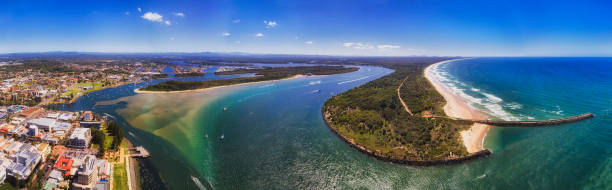
  4. Very well descriptive and with a beautiful pic about Marina. Thanks for sharing.

    Liked by 2 people

Leave a Reply to vermavkv Cancel reply

Your email address will not be published. Required fields are marked *

Discover more from noga noga

Subscribe now to keep reading and get access to the full archive.

Continue reading